The Future of AI: What to Expect in 2023
April 13, 2023

Hareesh Ramachandran
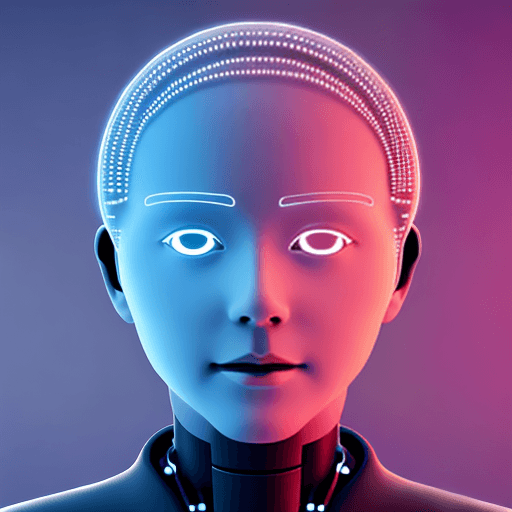
AI will become more human-like and conversational. One of the goals of AI is to create systems that can interact with humans naturally and intelligently, using language, voice, gestures, emotions, and common sense.
Artificial Intelligence
The Future of AI: What to Expect in 2023
Artificial intelligence (AI) is one of the most exciting and rapidly evolving fields of technology today. AI has the potential to transform every aspect of our lives, from health care to education, from entertainment to transportation, and from business to social goods. But what can we expect from AI in the next year? What are some of the trends and challenges that will shape the future of AI in 2023? Here are some of my predictions based on the current state of the art and the emerging developments in the field.
1. AI will become more human-like and conversational. One of the goals of AI is to create systems that can interact with humans naturally and intelligently, using language, voice, gestures, emotions, and common sense. In 2023, we will see more advances in natural language processing (NLP), natural language generation (NLG), speech recognition, speech synthesis, computer vision, and affective computing. These technologies will enable AI systems to understand and generate natural language, recognize and produce speech, analyze and synthesize images and videos, and detect and express emotions. We will see more applications of AI in chatbots, virtual assistants, social robots, customer service, education, entertainment, and health care.
2. AI will become more ethical and trustworthy. Another goal of AI is to create systems that are aligned with human values and that can be trusted by humans. In 2023, we will see more efforts in developing ethical principles and frameworks for AI, as well as technical methods and tools for ensuring fairness, accountability, transparency, explainability, privacy, security, and safety of AI systems. We will also see more regulations and standards for governing the use and development of AI across different domains and regions. We will see more awareness and education among AI developers and users about the ethical implications and social impacts of AI.
3. AI will become more collaborative and cooperative. A third goal of AI is to create systems that can work with other systems and with humans in a collaborative and cooperative manner. In 2023, we will see more advances in multi-agent systems (MAS), distributed AI (DAI), reinforcement learning (RL), game theory, swarm intelligence, collective intelligence, and human-AI interaction (HAI). These technologies will enable AI systems to coordinate and communicate with each other, to learn from each other, negotiate and cooperate with each other, to compete and collaborate with each other, and to augment and complement human capabilities. We will see more applications of AI in smart cities, smart grids, smart transportation, smart manufacturing, smart agriculture, smart health care, smart education, smart entertainment, and smart governance.
4. AI will become more creative and generative. A fourth goal of AI is to create systems that can produce novel and valuable outputs that go beyond what humans can do or imagine. In 2023, we will see more advances in generative adversarial networks (GANs), variational autoencoders (VAEs), transformers, neural style transfer (NST), neural architecture search (NAS), evolutionary algorithms (EAs), computational creativity (CC), and artificial neural networks (ANNs). These technologies will enable AI systems to generate realistic images, videos, sounds, music, text, code, designs, artworks, and inventions. We will see more applications of AI in content creation, entertainment, education, research, and innovation.
5. AI will become more accessible and ubiquitous. A fifth goal of AI is to create systems that can be used by anyone, anywhere,
anytime, and for any purpose. In 2023, we will see more advances in cloud computing, edge computing, fog computing, quantum computing, neuromorphic computing, and brain-computer interfaces (BCIs). These technologies will enable AI systems to run faster, cheaper, more efficiently, more securely, and more seamlessly on various devices and platforms. We will also see more advances in low-code/no-code platforms, open-source frameworks, online courses, and community initiatives that will make AI more available and affordab le to everyone.We will see more applications of AI in every industry and every domain of human activity.
These are some of my predictions for the future of AI in 2023. Of course, these are not exhaustive or definitiveand there may be surprises and uncertainties along the way. But I hope they give you a glimpse of what is possible and what is coming in this amazing field of technology. I am very optimistic and enthusiastic about the future of AI and I hope you are too. Let's work together to make it a better future for everyone.